Cracking Google’s Local 3-Pack: A Step-by-Step Optimization Playbook
December 10, 2016
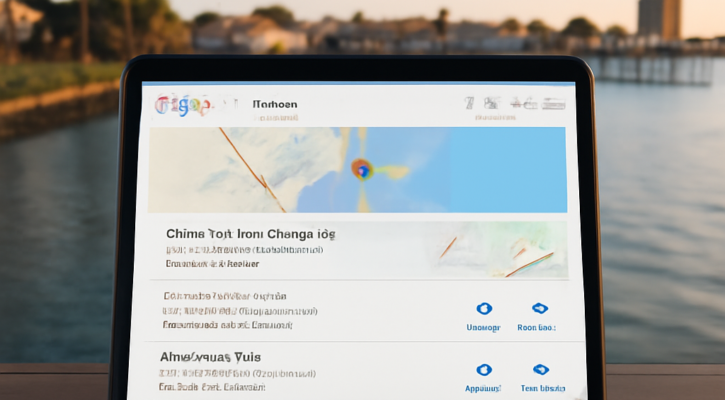
The Google local 3-pack is the block of three map listings that appears above standard organic results for searches with local intent. Winning one of those spots depends on a full Google Business Profile, accurate citations, steady reviews, on-page location signals, and ongoing measurement, not on budget alone. This playbook walks through each step in the order local search professionals usually tackle them.
What is the local 3-pack and why does it matter?
The local 3-pack is the block of three map listings Google shows above standard organic results. Those listings capture most of the clicks for searches with local intent, making them the most valuable spot for any business with a physical location. Winning a spot requires a combination of profile optimization, on-page signals, citations, reviews, and ongoing measurement.
How do you fully build a Google Business Profile?
Everything in local search orbits around the Google Business Profile (GBP), formerly known as Google My Business. A half-finished profile is the single most common reason small businesses get stuck on page two of the map results. Google’s local algorithm needs information to evaluate relevance, and a sparse profile gives it almost nothing to work with.
The business name should match what appears on the storefront and on legal documents. No keyword stuffing in the name field, since Google has gotten aggressive about catching and penalizing that. The primary category should be the most specific option available. A bakery that also sells coffee should pick “Bakery,” not “Cafe,” unless coffee really is the main draw. Secondary categories can fill in the rest.
From there, every field deserves attention: hours of operation, special holiday hours, services, products, attributes, a detailed business description, and the service area if applicable. Profiles that fill out 100% of available fields tend to outrank profiles that only handle the basics, even when other signals are roughly equal.
Why do photos and videos matter so much?
Local listings with regularly updated photos receive significantly more clicks and direction requests than those without. Google itself has confirmed this in its local search guidelines. A useful rule of thumb is to upload a few fresh images each month, covering the storefront exterior, interior, products, team, and any recent work. Geotagged photos can help, though Google strips most EXIF data on upload, so the bigger win is simply showing the place looks active and real.
Which on-page signals affect local rankings?
The website still matters, even in an era when many searches never leave Google’s interface. The local 3-pack pulls signals from the business’s actual site, including how it represents location and service area.
City and service keywords should appear naturally in the homepage title tag, H1, and meta description. Location pages help businesses that serve multiple areas, but only when each page is genuinely unique. Copy-pasting the same paragraph and swapping out city names is one of the fastest ways to look thin to Google. Each location page should include directions, parking notes, neighborhood references, team members based at that location, and reviews tied to that branch.
Schema markup, specifically LocalBusiness schema, gives Google a structured way to read business details. Most modern site builders make this easy to add, and the payoff is meaningful for businesses competing in crowded categories.
How do you build citations correctly?
Citations are mentions of the business name, address, and phone number on other websites. Industry directories, chambers of commerce, local news sites, and review platforms all count. Google uses these references to verify that a business actually exists where it says it does.
Volume helps, but consistency is non-negotiable. If the business is listed as “123 Main St” on one directory and “123 Main Street, Suite 4” on another, Google has to decide which is correct. Small inconsistencies across dozens of sites add up to a real ranking drag. Many local agencies use scanning tools to audit citations across hundreds of high-traffic directories before doing any other optimization work, because cleaning up bad data often produces faster gains than building new links.
What role do reviews play in local rankings?
Reviews influence rankings in two ways. First, sheer volume and average rating feed directly into Google’s local algorithm. Second, the keywords customers use in their reviews give Google additional context about what the business actually does. A pool service company that gets reviews mentioning “weekly cleaning,” “salt cell replacement,” and “green pool recovery” is building a relevance profile that pure on-page optimization can’t replicate.
Asking for reviews should be systematic. A simple post-service text or email with a direct link to the GBP review form converts far better than a generic “leave us a review” sign at the register. Local businesses that ask every satisfied customer, every day, tend to outpace competitors who only ask occasionally.
Responding to reviews is just as important. Google has confirmed that owner responses are a positive signal, and customers reading reviews pay close attention to how a business handles both praise and criticism. A thoughtful reply to a negative review often does more to convert a hesitant prospect than ten five-star ratings would.
How do proximity, prominence, and relevance affect rankings?
Google’s local ranking factors fall into three buckets: proximity, prominence, and relevance. Most businesses can only directly influence two of them.
Proximity is largely fixed. A searcher standing two blocks from a competitor will usually see that competitor first. The workaround is to widen the pool of search terms the business ranks for, so it captures customers searching from a broader area or with more specific intent.
Prominence is built over time through reviews, backlinks, press mentions, and overall brand visibility online. A feature in a local newspaper, a mention from a regional blogger, or sponsorship of a community event all feed prominence. So does general organic SEO, since a strong website lifts the entire local profile.
Relevance is where on-page work, GBP categories, services, and review content come together. The more clearly a business signals what it does, the more often it shows up for searches that match.
How do you track local SEO performance?
Local SEO without measurement is guesswork. GBP Insights, now folded into the Performance tab, shows how many people found the listing through direct searches versus discovery searches, what actions they took, and which photos got the most views. Pairing that data with rank tracking tools that monitor map pack positions from different points around the service area gives a clearer picture than checking rankings from the office, which Google personalizes anyway.
Patterns usually emerge within sixty to ninety days. Discovery searches climbing means relevance is improving. Direction requests rising means the listing is converting. Calls dropping while impressions rise often means the listing photo or category needs work.
What does long-term local SEO success look like?
None of these techniques work in isolation. A perfect GBP profile with no reviews won’t outrank a decent profile with hundreds of authentic five-star ratings. A site full of location pages won’t help if the citations are a mess. The businesses that crack the local 3-pack and stay there treat optimization as a habit, not a project. They post regularly, ask for reviews every week, fix citation errors as they appear, and respond to every customer who leaves feedback. Over six to twelve months, that consistency tends to separate the businesses that own the map pack from the ones that wonder why they can’t seem to break in.
FAQ
What is the Google local 3-pack?
The local 3-pack is the set of three map-based business listings that Google displays above standard organic results for searches with local intent. These listings capture most of the clicks from nearby searchers and often determine which business a customer visits that day.
How long does it take to rank in the local 3-pack?
Patterns in performance data usually emerge within sixty to ninety days of consistent optimization work. Sustained results, where a business holds a top-three map position against competitors, typically develop over six to twelve months of regular profile updates, review requests, citation cleanup, and review responses.
What is the most important local ranking factor?
Google evaluates three buckets: proximity, prominence, and relevance. Proximity is mostly fixed by the searcher’s location, while prominence (reviews, backlinks, press mentions, brand visibility) and relevance (GBP categories, on-page signals, review keywords) are the two factors a business can directly improve through optimization work.
Related coverage
- Local Search Engine Optimization For Small Businesses
- SEO Demystified: A Step-by-Step Playbook for Business Owners Ready to Dominate Search Rankings
Related coverage
- Local Search Engine Optimization For Small Businesses
- SEO Demystified: A Step-by-Step Playbook for Business Owners Ready to Dominate Search Rankings